

Implementation of mobility within the EURECA-PRO program
In the second half of April 2026, Prof. Aleksander Sładkowski visited the Technical University of Crete (TUC, Greece) as part of the EURECA-PRO program. Silesian University of Technology (SUT) is currently one of the participants in this program. This program, called the European University EURECA-PRO, unites nine leading European universities. It includes universities from France, Germany, Spain, and other countries. One of the main goals of the EURECA-PRO consortium is to ensure broad participation of members of the academic community of individual universities in the consortium's activities. To achieve this goal, the number of joint activities organized at all levels (students, doctoral students, staff) and in various areas of joint activity (teaching, research, organizational, advertising, social, etc.) is constantly growing. Relevant bureaus are currently being established at partner universities to organize activities within the consortium. Head of the EURECA-PRO bureau at TUC, Konstantina Fragkedaki, led a tour of the university campus and also participated in subsequent meetings.
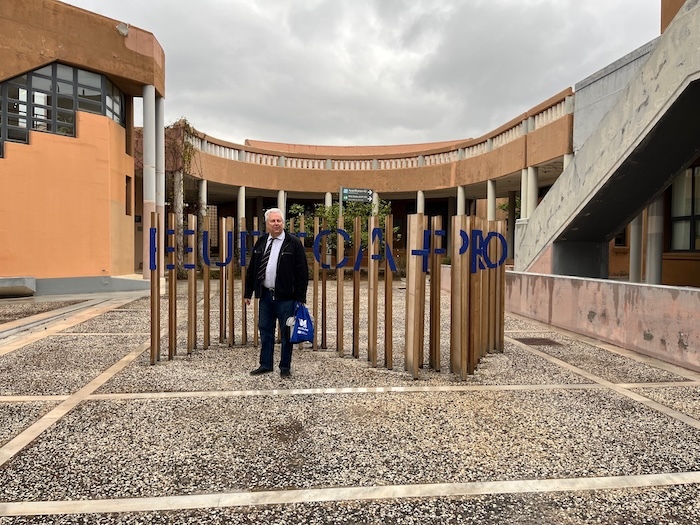
Prof. A. Sładkowski at the TUC campus in front of the EURECA-PRO stand
SUT faculty members were selected for this program on a competitive basis. Prof. A. Sładkowski's internship included a visit to the TUC School of Industrial Engineering and Management (a faculty-like institution), where he learned about Greek achievements in computer technology, digital design, and the application of other significant developments to research and teaching. Prof. Aleksander Sładkowski met with the Dean of the School, prof. Michalis Doumpos. They discussed cooperation between the faculties and the possibility of Greek scientists participating in joint research projects, conferences, and joint publications.
Student mobility is an equally important issue. The exchange of students, doctoral students, and faculty members under the Erasmus+ program was discussed at the relevant TUC office. All staff members participated in the discussion, and a decision was made to expand the number of faculties included in the bilateral agreement between the universities.
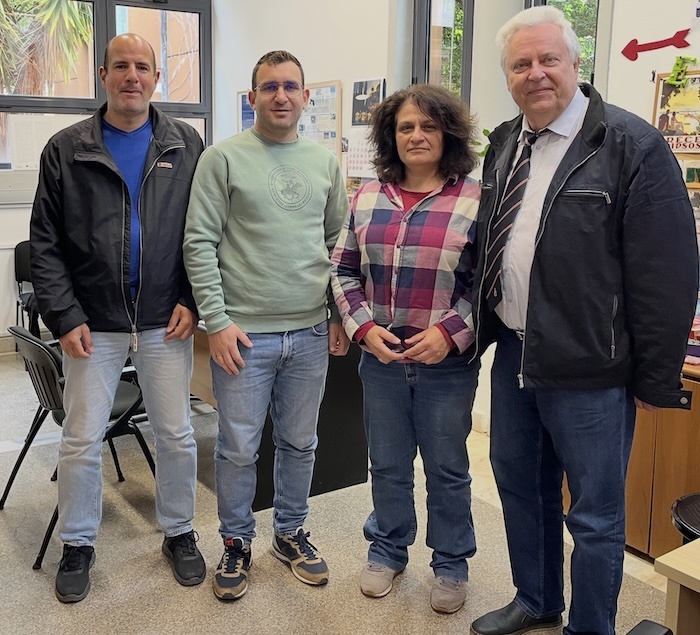
Meeting with staff from the Erasmus+ office at TUC (from left to right): Panagiotis Paizakis (Responsible for International Mobility); Lefteris Maragkoudakis (Inclusion Officer); Elena Papadogeorgaki (Head of the TUC Erasmus+ Office); prof. Aleksander Sładkowski
Professor A. Sładkowski's visit to TUC concluded with a meeting with the university's leadership. During the meeting, the prospects for further cooperation, double degree opportunities for students, the participation of Greek scientists in the TP'2026 International Congress, and other matters of mutual interest were discussed.
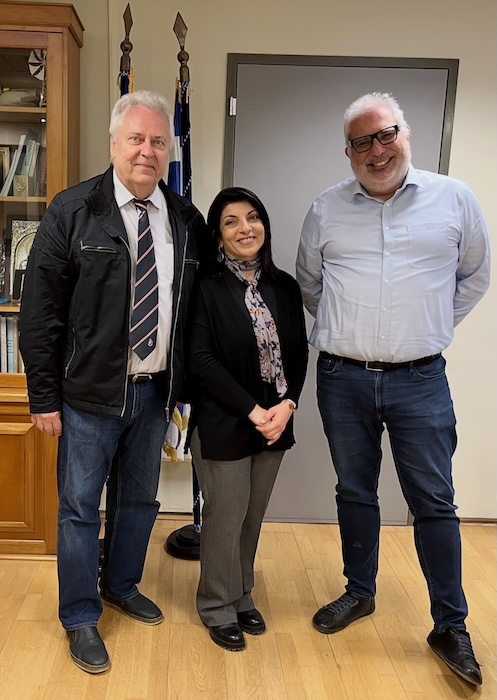
Participants in the meeting with TUC leaders (from right to left): prof. Konstantinos - Alketas Oungrinis, Vice Rector of Research and Innovation; prof. Danae Venieri, Vice Rector of Finance and Development; prof. Aleksander Sładkowski
To sum up the results of the above mobility, our universities have great opportunities in scientific and pedagogical cooperation, and both parties have expressed strong interest in further developing this.
 mob: +48 605 553 314
 tel: +48 32 603 4291
 fax: +48 32 603 4157
 skype: sladk_mobile
 email:


